
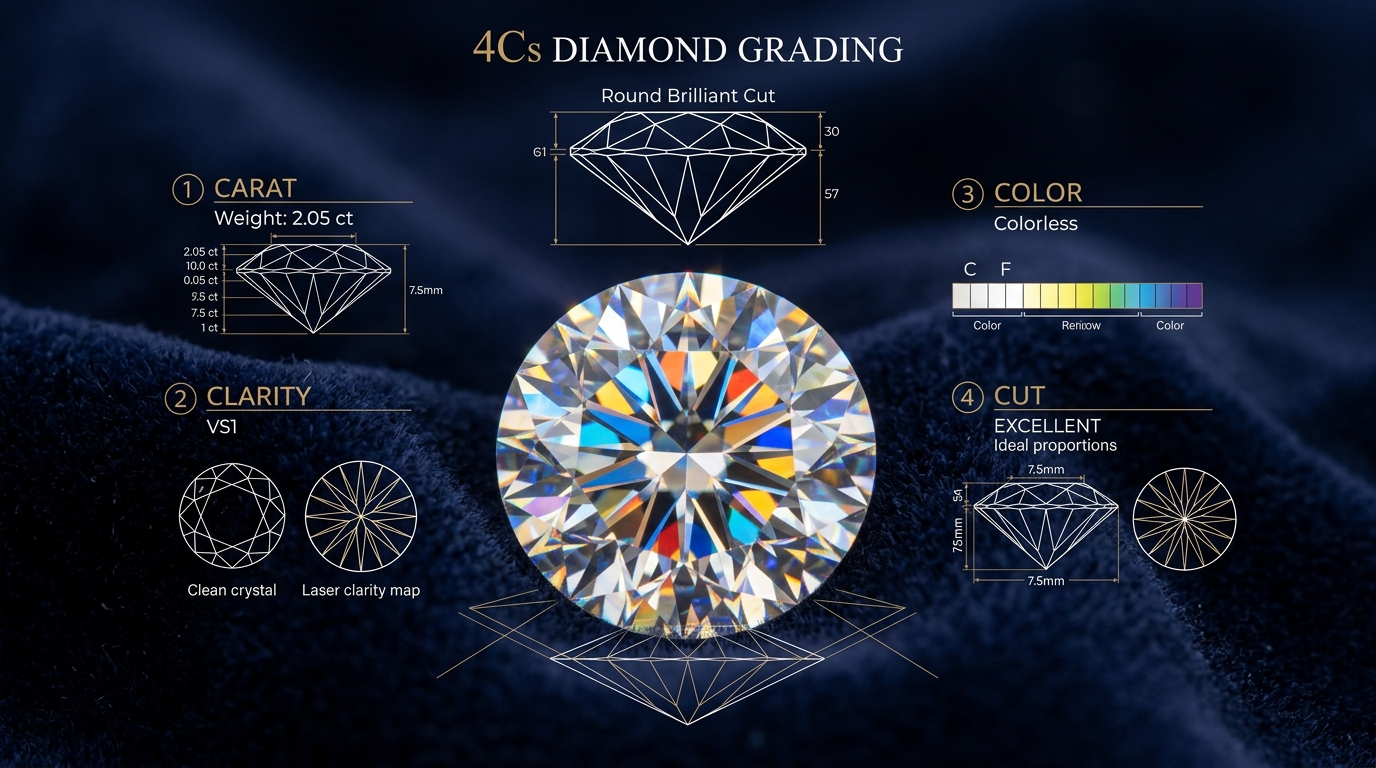
Diamond Grading
Understanding the 4Cs of Diamond Quality: Cut, Color, Clarity & Carat
Explore the universal standard established for evaluating diamond quality. Learn how each 'C' influences beauty, optical performance, and value.
Global Diamond Laboratory
ISO & International Gemological Accreditation • Mon – Fri: 10:00 – 19:00
A comprehensive guide to identifying the Big Three precious gemstones, recognizing common heat and clarity treatments, and understanding geographic origin determinations.
Marcus Thorne, GG
Senior Colored Stone Evaluator
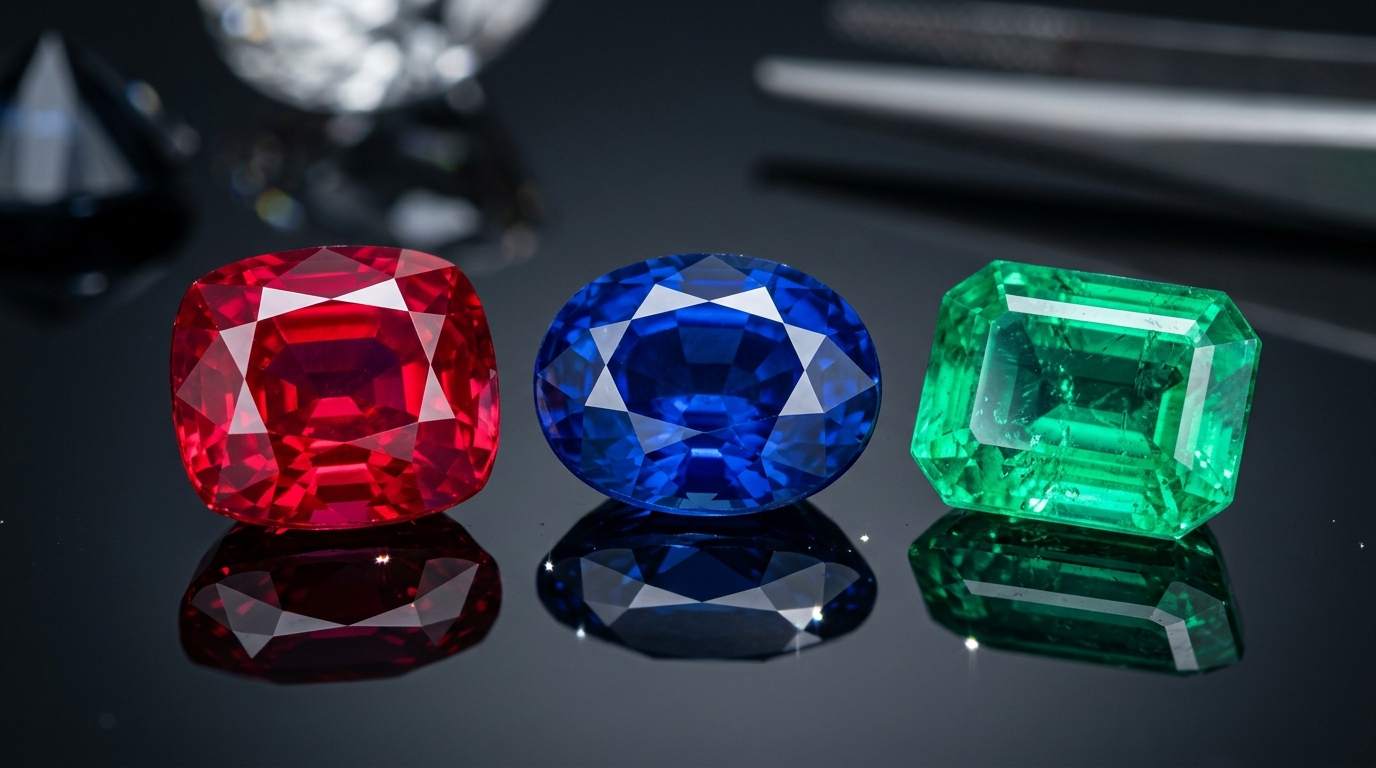
Vibrant arrangement of faceted ruby, sapphire and emerald gemstones on reflective dark surface
For millennia, Rubies, Sapphires (both varieties of the mineral Corundum, Al2O3), and Emeralds (the green variety of Beryl, Be3Al2Si6O18) have captivated royalty and connoisseurs. Evaluating colored gems requires a different methodology than diamond grading—color saturation, tone, and hue are the paramount drivers of value.
Because untreated, high-clarity colored gemstones of vibrant color are exceedingly scarce, the gemstone trade has developed various enhancement methods over centuries:
“A certified unheated Burmese ruby or untreated Kashmir sapphire can command price premiums of 300% to 1000% over heated counterparts of comparable appearance.”
Origin reports provide valuable insight for collectors. By cross-referencing geological inclusion suites (such as calcite rhombs in Burmese rubies or three-phase inclusions in Colombian emeralds) alongside LA-ICP-MS trace element mapping, gemologists establish probable geographic origins such as Sri Lanka, Madagascar, Myanmar, or Colombia.
Senior Colored Stone Evaluator
Dedicated to unbiased gemological examination, spectroscopic research, and consumer education at GGDL Laboratory.
Explore the universal standard established for evaluating diamond quality. Learn how each 'C' influences beauty, optical performance, and value.
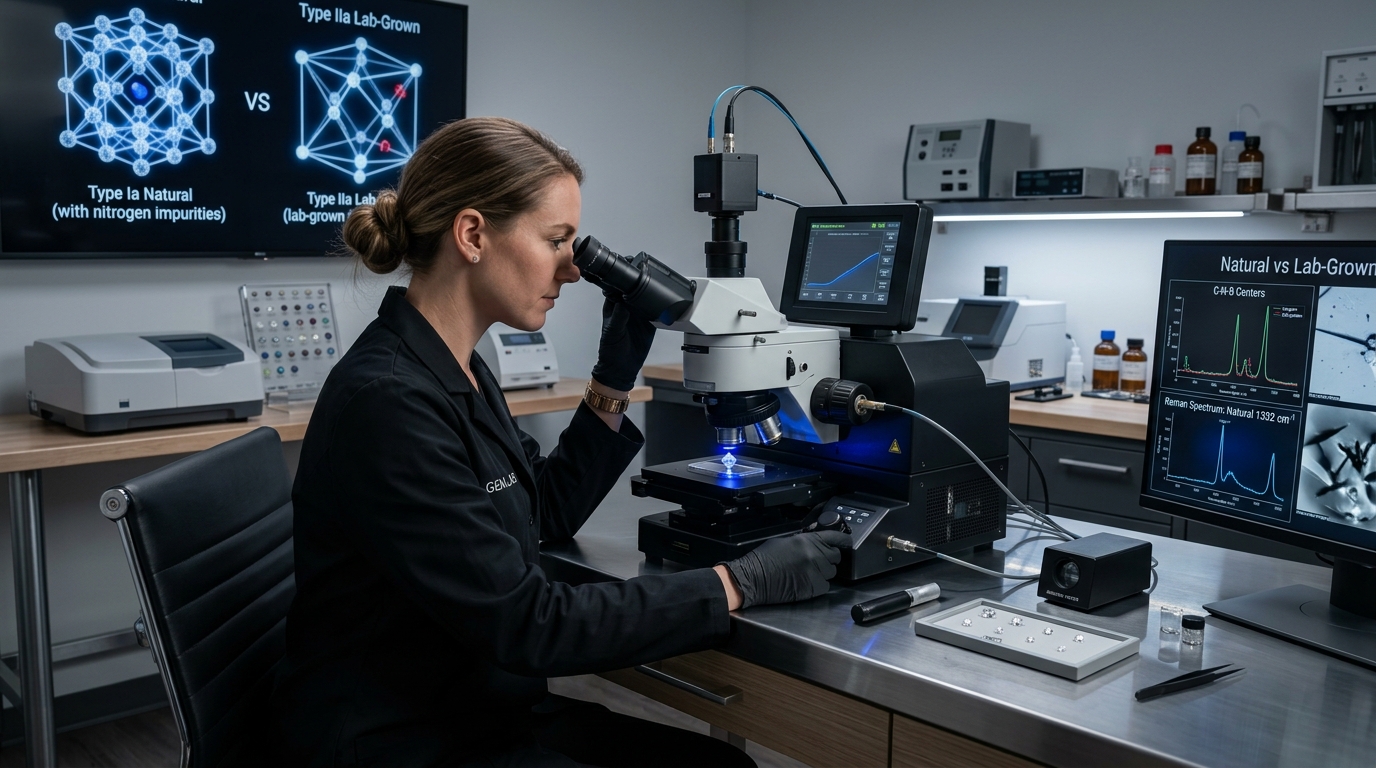
Understand the chemical identity, crystal growth patterns (HPHT vs. CVD), and spectroscopic methods used by gemologists to distinguish natural and created stones.
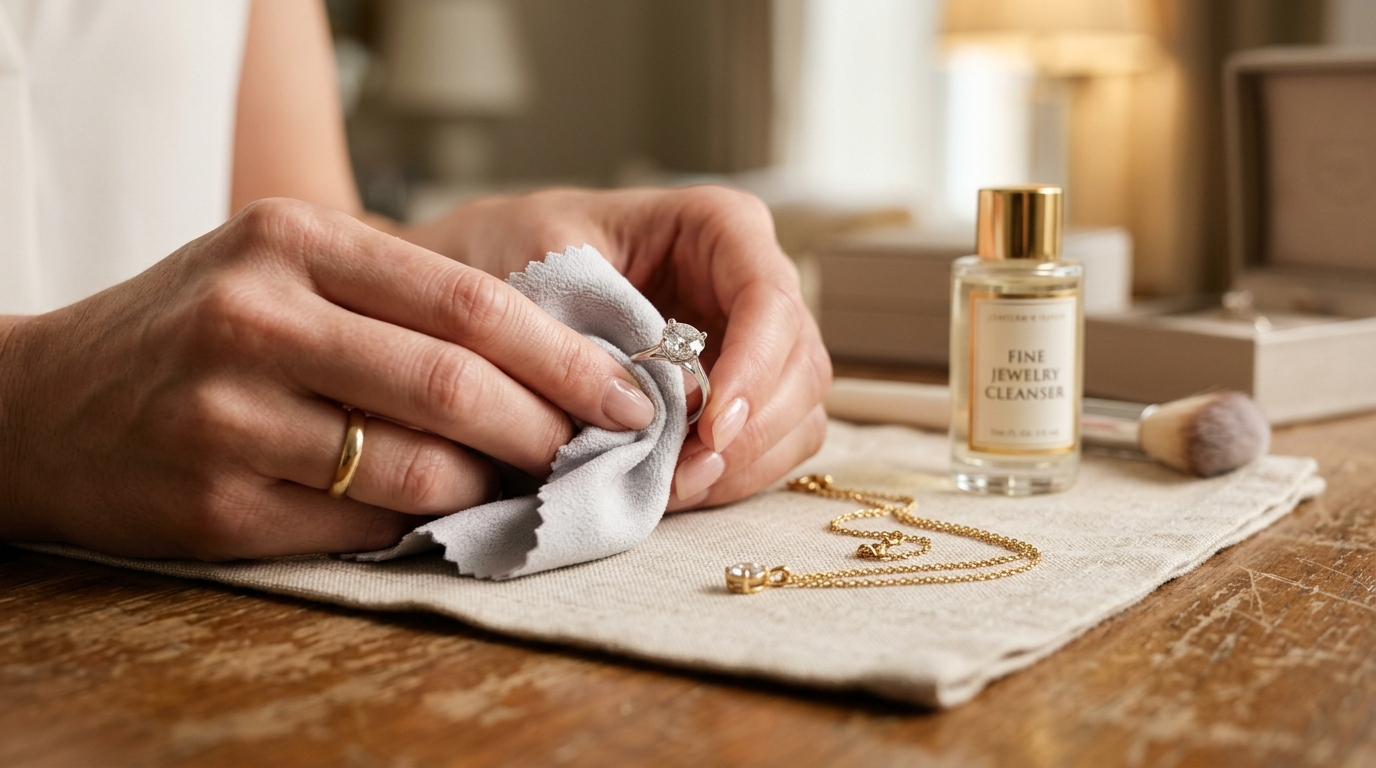
Keep your heirloom jewellery sparkling for generations. Expert tips on safe at-home cleaning, ultrasonic cleaner hazards, and storage best practices.