
Diamond Grading
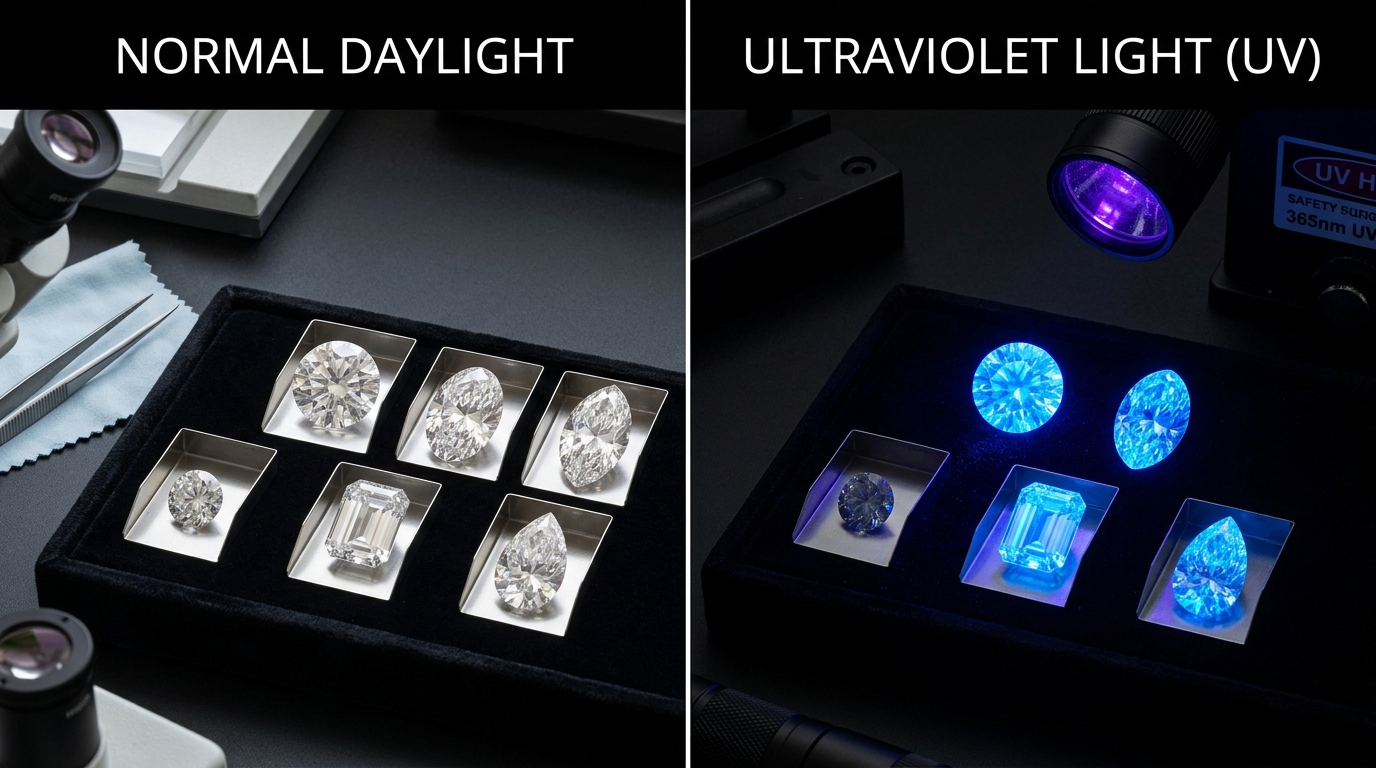
Diamond Fluorescence: Myths, Science & Impact on Visual Appearance
Does blue UV fluorescence make a diamond look milky or whiter? Learn what causes fluorescence, how laboratories grade it, and when it represents smart buying value.
Global Diamond Laboratory
ISO & International Gemological Accreditation • Mon – Fri: 10:00 – 19:00
Explore the universal standard established for evaluating diamond quality. Learn how each 'C' influences beauty, optical performance, and value.
Dr. Alistair Vance
Lead Gemologist & Head of Grading, GGDL
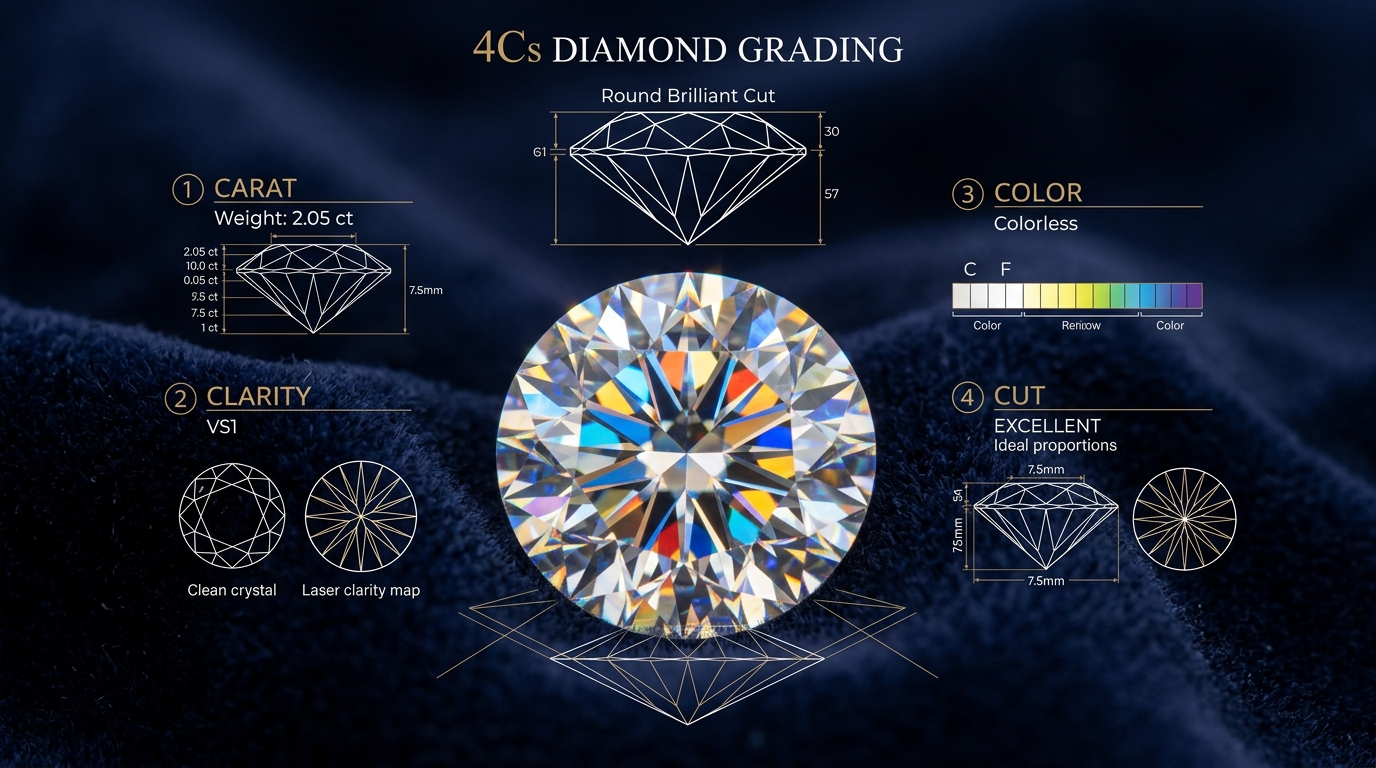
4Cs Diamond grading diagram showing cut, clarity, color and carat weight
When assessing a diamond's rarity and aesthetic perfection, gemologists worldwide adhere to the internationally standardized 4Cs framework: Cut, Color, Clarity, and Carat Weight. Developed to establish an objective, universal language, this system allows jewelers, collectors, and consumers to understand exactly what makes each stone unique.
While many buyers focus initially on carat weight, experienced gemologists know that balance and harmony among all four characteristics dictate a diamond’s true brilliance and value.
Cut refers not merely to the outline shape of a diamond (such as Round, Oval, or Emerald), but to the precision of its proportions, symmetry, facet alignment, and polish.
When a diamond is cut to ideal proportions, light enters through the crown, bounces across internal pavilion facets, and exits straight through the top as radiant brilliance and prismatic fire. If a diamond is cut too shallow or too deep, light leaks through the sides or bottom, leaving the stone dull and lifeless.
“A smaller diamond with an Excellent cut will often outshine and look more impressive than a larger diamond with a mediocre cut grade.”
The diamond color evaluation scale runs from D (completely colorless) to Z (light yellow or brown). Truly colorless diamonds (D, E, and F) are structurally pure and chemically inert, acting like clean prism windows that refract light without absorbing spectrum wavelengths.
As you move down the scale to Near Colorless (G, H, I, J), subtle warmth becomes detectable under specialized gemological lighting, though often imperceptible in warm metal mountings such as yellow or rose gold.
Formed deep within the Earth under immense heat and pressure over billions of years, virtually all natural diamonds contain tiny internal characteristics (inclusions) and external surface imperfections (blemishes).
Clarity grading ranges from Flawless (FL) and Internally Flawless (IF), down to Included (I1-I3). Grades such as VVS (Very Very Slightly Included) and VS (Very Slightly Included) contain microscopic characteristics that require 10x magnification or laboratory microscopes to identify, ensuring an 'eye-clean' face-up appearance.
One metric carat is defined as exactly 200 milligrams (0.20 grams), subdivided into 100 'points'. Because large rough diamonds of gem quality are exponentially rarer in nature, diamond pricing increases exponentially rather than linearly with carat weight.
Cut should almost always be prioritized highest, as it directly governs how effectively the diamond reflects and refracts light to create sparkle.
An eye-clean diamond is one whose inclusions are so small or positioned such that they cannot be seen with the unaided human eye from a standard viewing distance.
Lead Gemologist & Head of Grading, GGDL
Dedicated to unbiased gemological examination, spectroscopic research, and consumer education at GGDL Laboratory.
Does blue UV fluorescence make a diamond look milky or whiter? Learn what causes fluorescence, how laboratories grade it, and when it represents smart buying value.
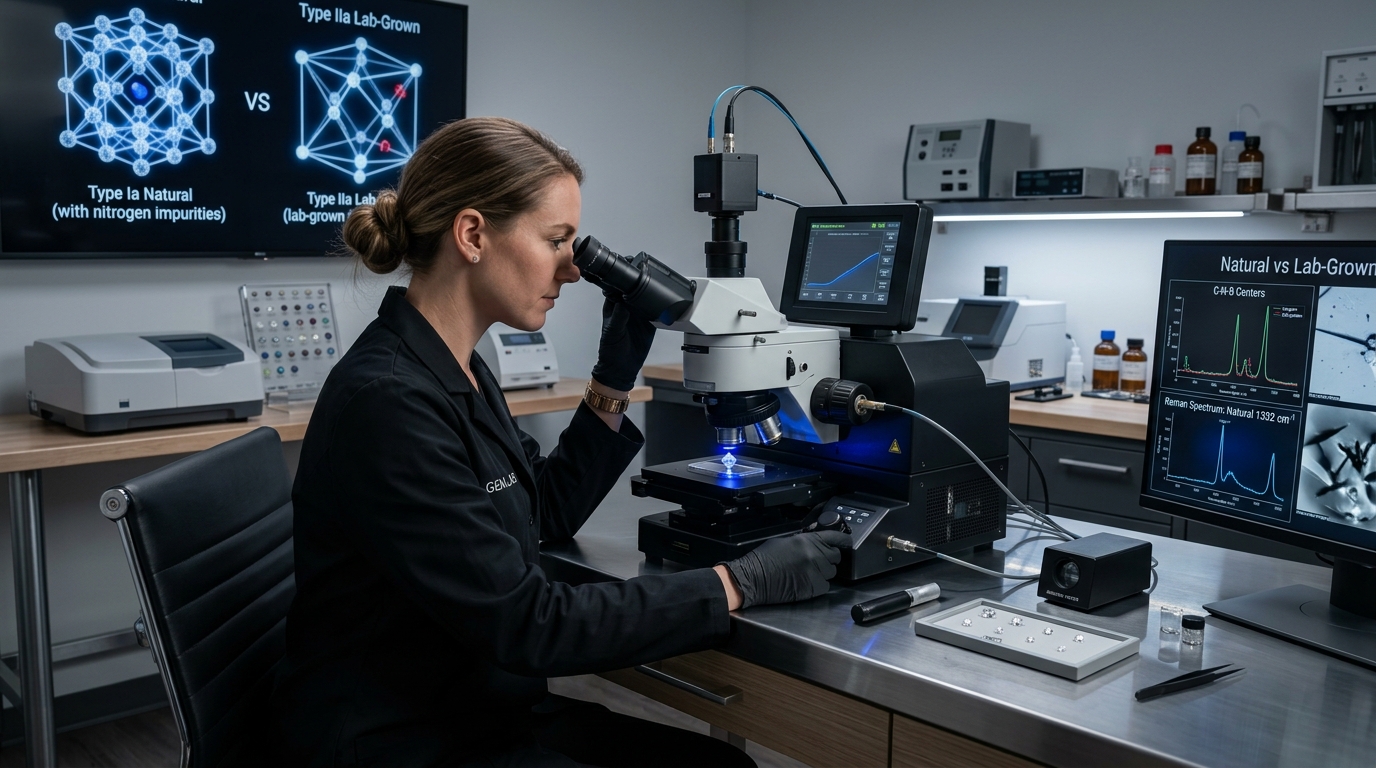
Understand the chemical identity, crystal growth patterns (HPHT vs. CVD), and spectroscopic methods used by gemologists to distinguish natural and created stones.
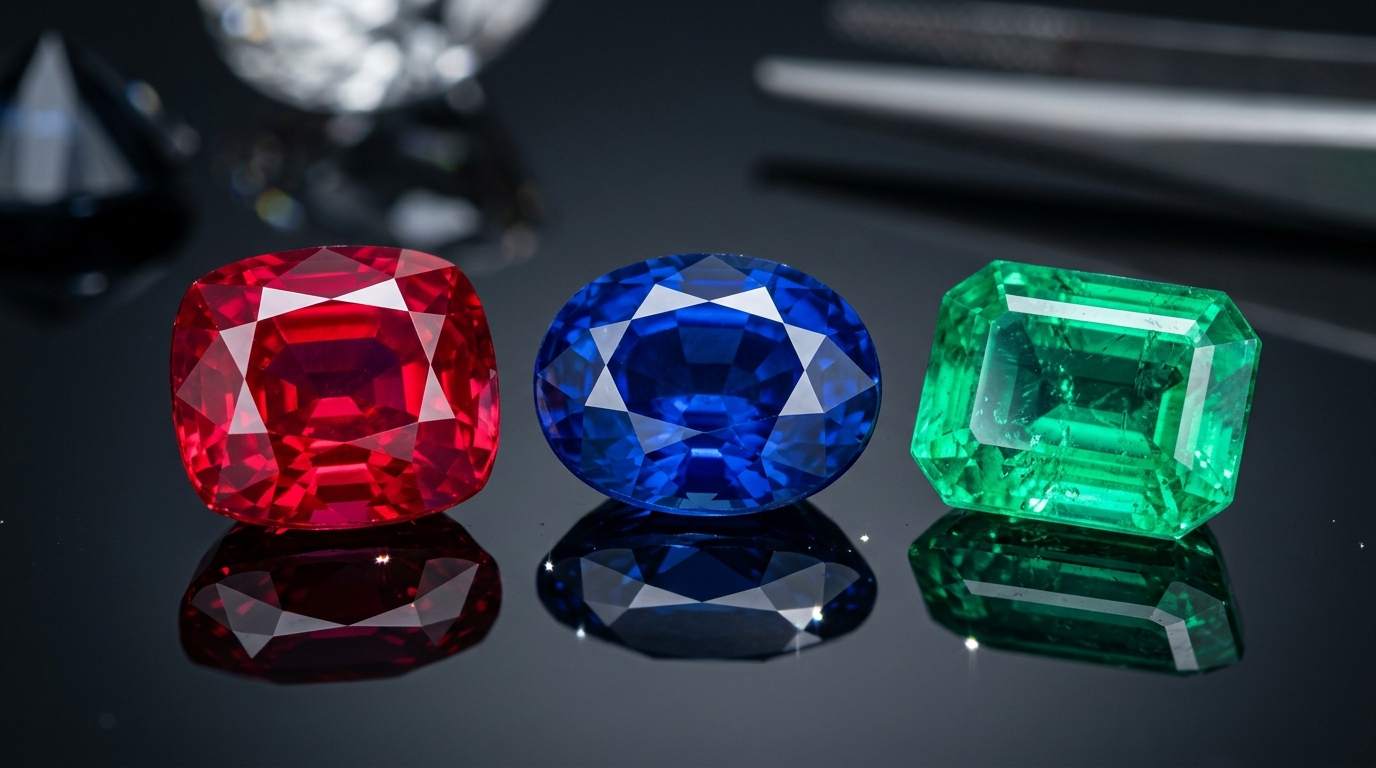
A comprehensive guide to identifying the Big Three precious gemstones, recognizing common heat and clarity treatments, and understanding geographic origin determinations.