
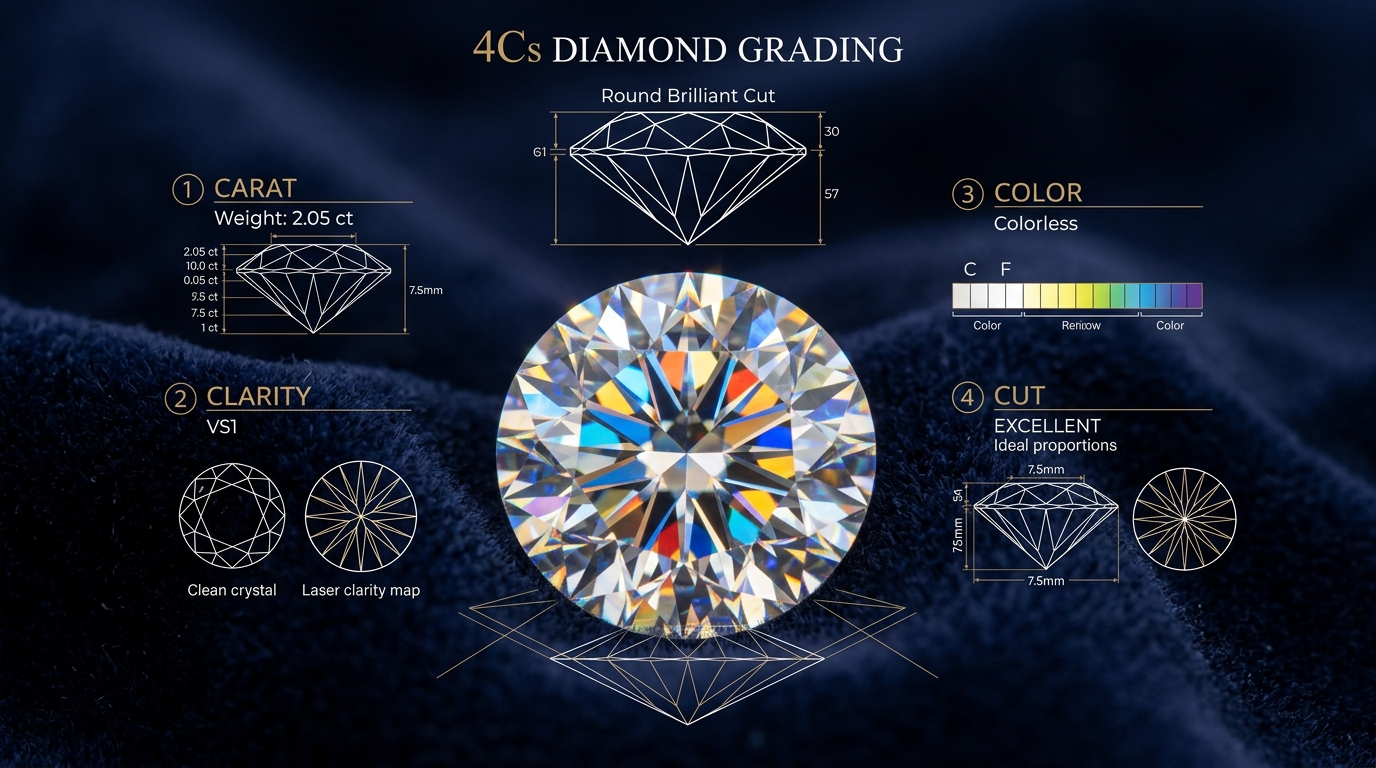
Diamond Grading
Understanding the 4Cs of Diamond Quality: Cut, Color, Clarity & Carat
Explore the universal standard established for evaluating diamond quality. Learn how each 'C' influences beauty, optical performance, and value.
Global Diamond Laboratory
ISO & International Gemological Accreditation • Mon – Fri: 10:00 – 19:00
Does blue UV fluorescence make a diamond look milky or whiter? Learn what causes fluorescence, how laboratories grade it, and when it represents smart buying value.
Dr. Alistair Vance
Lead Gemologist & Head of Grading, GGDL
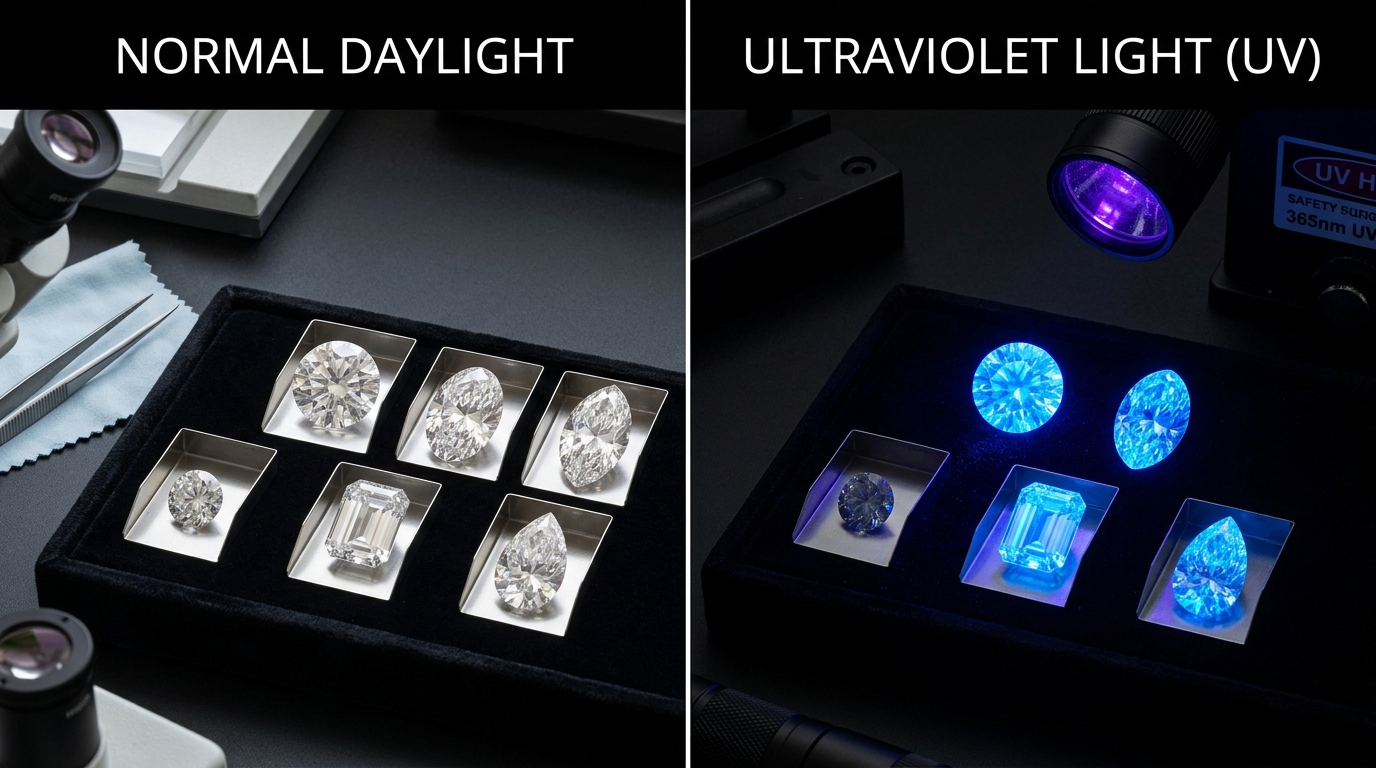
Comparative demonstration of diamonds under daylight versus glowing blue under UV light
When subjected to long-wave ultraviolet (UV) light—such as blacklights or direct sunlight—certain diamonds emit a temporary soft glow. This optical phenomenon, known as fluorescence, is caused by submicroscopic sub-atomic trace element structures, most commonly sub-microscopic nitrogen clusters (N3 centers).
Laboratory grading reports classify fluorescence into standardized intensity categories: None, Faint, Medium, Strong, and Very Strong, along with the fluorescent color (over 95% of fluorescent diamonds glow blue).
In the trade, market sentiment often discounts fluorescent diamonds in top color grades (D-F), creating an outstanding opportunity for informed buyers:
“Studies across major gemological laboratories have proven that the vast majority of consumers cannot differentiate between fluorescent and non-fluorescent diamonds in blind daylight tests.”
Lead Gemologist & Head of Grading, GGDL
Dedicated to unbiased gemological examination, spectroscopic research, and consumer education at GGDL Laboratory.
Explore the universal standard established for evaluating diamond quality. Learn how each 'C' influences beauty, optical performance, and value.
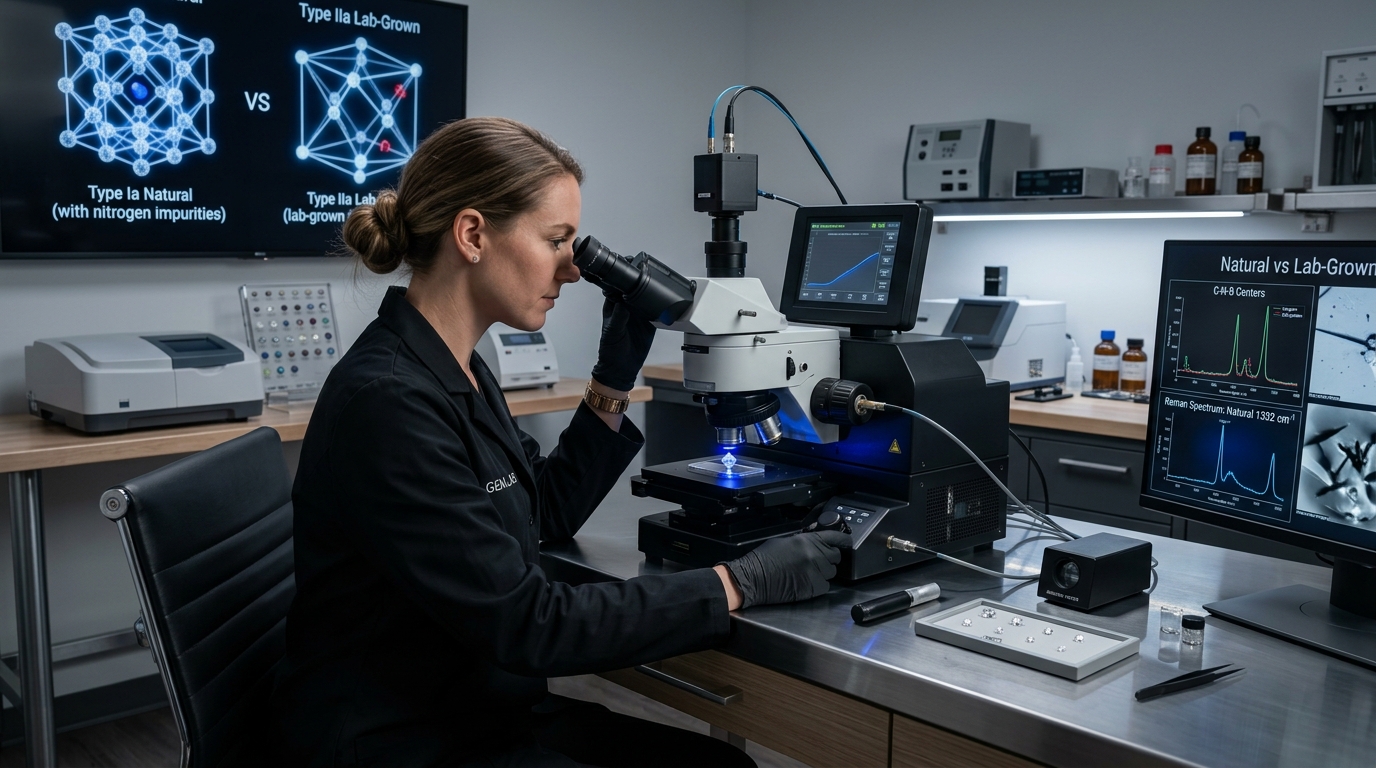
Understand the chemical identity, crystal growth patterns (HPHT vs. CVD), and spectroscopic methods used by gemologists to distinguish natural and created stones.
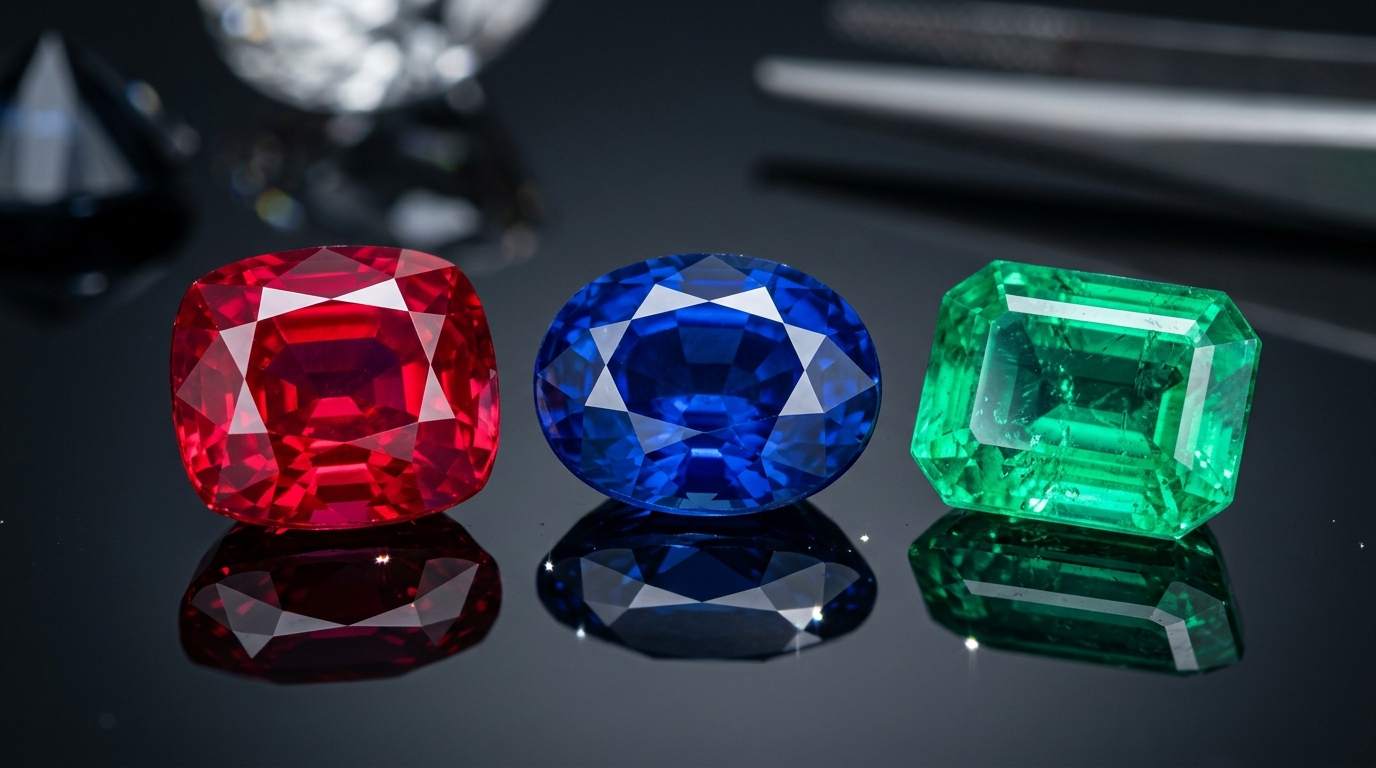
A comprehensive guide to identifying the Big Three precious gemstones, recognizing common heat and clarity treatments, and understanding geographic origin determinations.